Gjelina's Mushroom Toast
Newsletter
Subscribe at the bottom of this page for the Chic Eats roundup. It includes new and updated recipes along with a grab bag of unique content that was interesting enough to share around the dinner table.
Stroganoff Vibes
I ate this toast at Gjelina well over six years ago, and it has been patiently waiting on my bottomless to-cook list ever since. Roll forward to this year's tomato season when I had some straggler tomatoes in need of use. My freezer supply of tomato water was just about depleted, so Gjelina's pasta pomodoro was the easy choice. As I was thumbing through my scribbles and bookmarks looking for a side, what should reappear on the scene but the long-lost mushroom recipe. You know that zing of excitement when you rediscover something delicious that you've wanted to make? I was zinged—a kismet pairing of two staples from the cookbook. But as they say, best-laid plans.
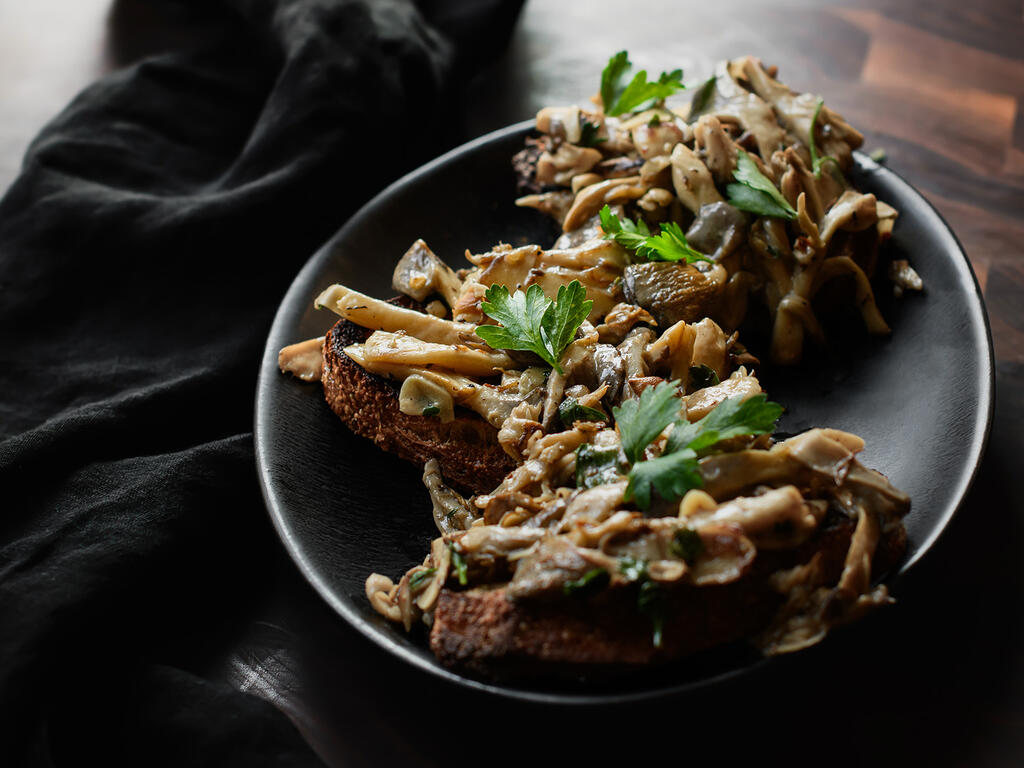
These are knife-and-fork mushroom toasts that give beef stroganoff vibes. To start, sourdough bread that's brushed with olive oil and cooked under high heat has smoky buttery notes that stand on their own. Add creamy seared mushrooms and—as two of us discovered—you can quickly lose yourself in the herb-soaked crumb. We polished off a serving meant for four people and ended up skipping the intended main course altogether. The eating experience reminds me of those last bites of a BLT, where juices have fully involved the bread but the crust still maintains enough texture to satisfy. In the cookbook, Travis Lett says he likes to eat this dish with a glass of red and call it a day.
I've said it many times, but Gjelina sits comfortably atop my VIP shelf. It doesn't hold the cook's hand, but the recipes are spot-on replicas of the restaurant dishes. That alone is worth its weight in morels.
As a postscript...A week later, I made a half portion of mushroom toast and finally paired it with the pasta pomodoro—a perfectly balanced summer or fall meal. All's well that ends well.
Around the Dinner Table
Attention to Detail
Mushrooms have long been an Achilles' heel of mine. I always seem to overcook them or they don't brown before turning to the soggy, rubbery dark side. Occasionally I've landed a good batch, but it seemed more like luck than skill. All of that said, I believe my fungi fortunes have turned a corner thanks to this recipe.
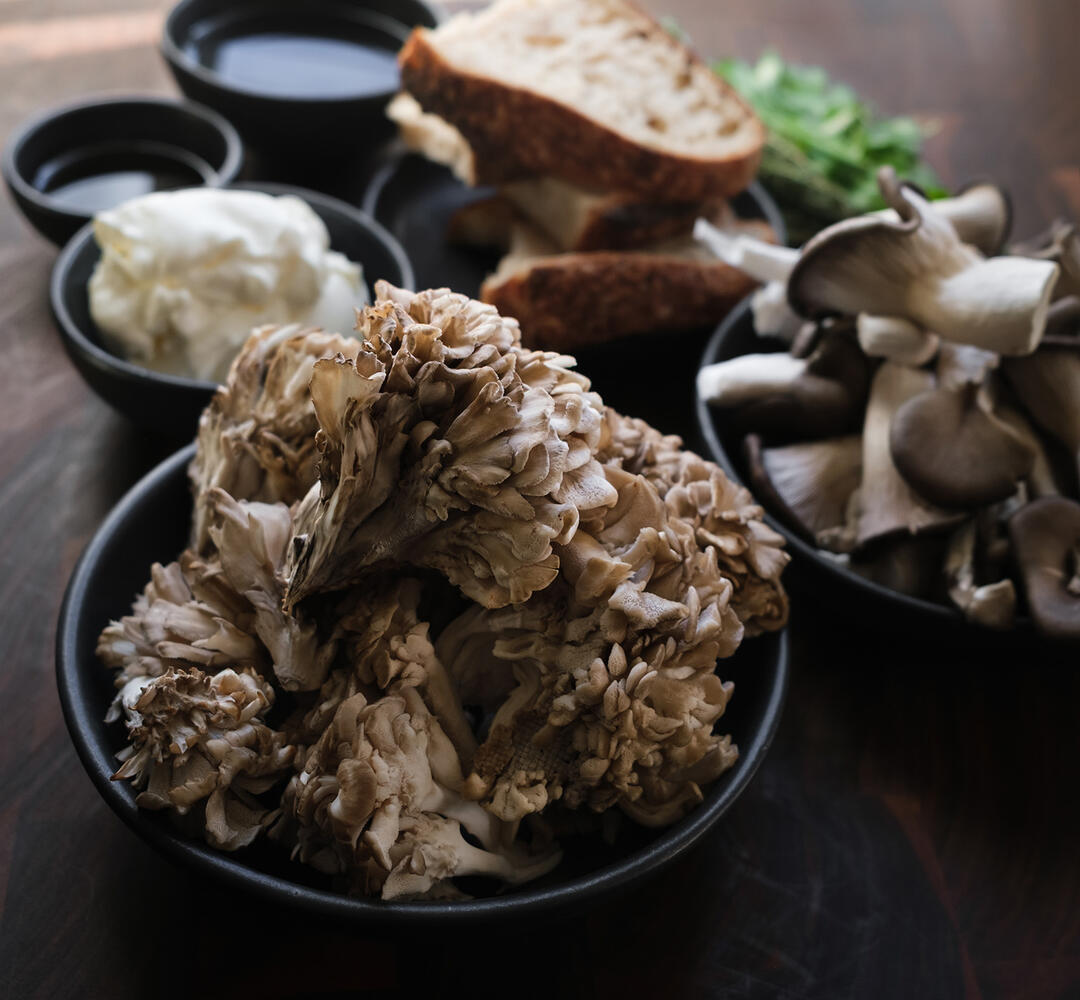
I made a pizza with king oyster mushrooms not long before tackling the toast. For the pizza, I referenced another Gjelina recipe that called for tossing the mushrooms in olive oil before cooking. The featured toast, on the other hand, calls for adding oil to a hot pan before the mushrooms. For the sake of this thought exercise we're going to ignore: 1) king oyster mushrooms are quite different from the maitake and blue oyster varieties pictured, and 2) upon rereading the king oyster recipe, I realized it specifies grilling (which I didn't do) instead of pan searing. It was a case of questionable reading comprehension and time constraints, but my minor fail and subsequent redemption taught me something.
That brings us back to the first time I made the mushroom toast. Without giving it much thought (obviously), I tossed the maitake and blue oysters in oil before cooking them. Getting any sort of meaningful sear was a challenge even though the pan wasn't crowded. The mushrooms were still excellent, but I had clearly missed out on some of that Maillard magic. The next day, I took the unused maitake and actually followed the recipe—adding the oil to the hot pan, then the dry mushrooms. They browned beautifully and right on schedule (about 3 minutes for the first side). Then I made the the full dish again with properly seared mushrooms—much better. There was clearly something to this, but I didn't know what until I started reading around.
Thanks to their porous structure, mushrooms contain a high percentage of water and act like sponges during cooking. While this may not be new information for many cooks, how you handle the mushrooms is where things get interesting—it can be the difference between rubbery and beautifully golden. An America's Test Kitchen article sent me down the right path in suggesting that browning is all about driving off moisture and minimizing fat absorption. The hot skillet is critical in this equation. ATK's approach is to use a quick steam to collapse the interior, then they hit it with high heat. Food52, like the Gjelina recipe, had the best results with fat in a hot pan. In both cases, the process hinges on creating the right conditions for color to develop.
One of the things I noticed about adding dry mushrooms to a hot pan with hot oil is that they didn't release much moisture until about 1 1/2 to 2 minutes in. If I extrapolate, the skillet and oil are just working at the surface of the cut pieces, aiding evaporation and browning without getting hoovered up into the mushroom. Is there something to the fact that oil and water don't mix? I have some answers but also questions. And I can see the logic with Gjelina's grilled king oyster recipe. The cooking environment is fundamentally different. The grate allows for the rapid evaporation of moisture and concentration of flavors so tossing the mushrooms in oil first is a help rather than a hindrance—it keeps them from sticking and drying out.
My takeaway with all of this is, on the one hand, to just read the recipe correctly. But the more interesting lesson is the interplay of oil, heat, and water when it comes to cooking mushrooms—and this doesn't even touch on the various kinds of mushrooms and how they might be treated differently. There's always more to figure out, but this bit of knowledge has helped break me free of the mushroom hangup so things are on the right track.
Original vs. Adapted
Crème Fraîche
Gjelina suggests using homemade buttermilk crème fraîche and there's a recipe included in the cookbook. I used the Bellweather Farms crème fraîche but plan to try the homemade at some point.
Lemon
Mushrooms and dairy are missing their best friend in this recipe: citrus. I add a few scrapings of lemon zest when the mushrooms are almost done cooking. I've had success both with and without lemon, so it's really up to you.
Toasting
The recipe calls for toasting the bread on a grill. I opted for the broiler method, but can absolutely see how charring the bread on a grill would add a worthwhile (though not essential) dimension.
Herbs
I doubled the herbs that were called for in the recipe and they're still relatively subtle.
Recipe Tips
How much?
You may, like I did, look at the amount of crème fraîche and think it's a typo—it's not. I was short by about 60 grams (2 ounces) the first time I made this recipe and its absence was noticeable. The richness of the crème fraîche is a dance partner to the wine's acidity. Despite all that dairy, the magic trick with Gjelina's mushroom toast is that it's not nearly as heavy as you would expect. Granted, this is not health food and need not be treated as such.
Pan Size
You don’t want the mushrooms to steam during the cooking process. I use a 12" pan with sloped sides and can cook 455 grams (16 ounces) of mushrooms in two batches. The other benefit of multiple batches is it gives you the ability to learn about your mushrooms and adjust as needed. Become the mushroom whisperer you were destined to be.
Farmers | Artisans
I make an effort to source my food from California artisans with a special focus on the Santa Monica Farmers Market. Below is a list of the people who contributed to this dish.
- Katz + Frantoio Grove // Olive Oil
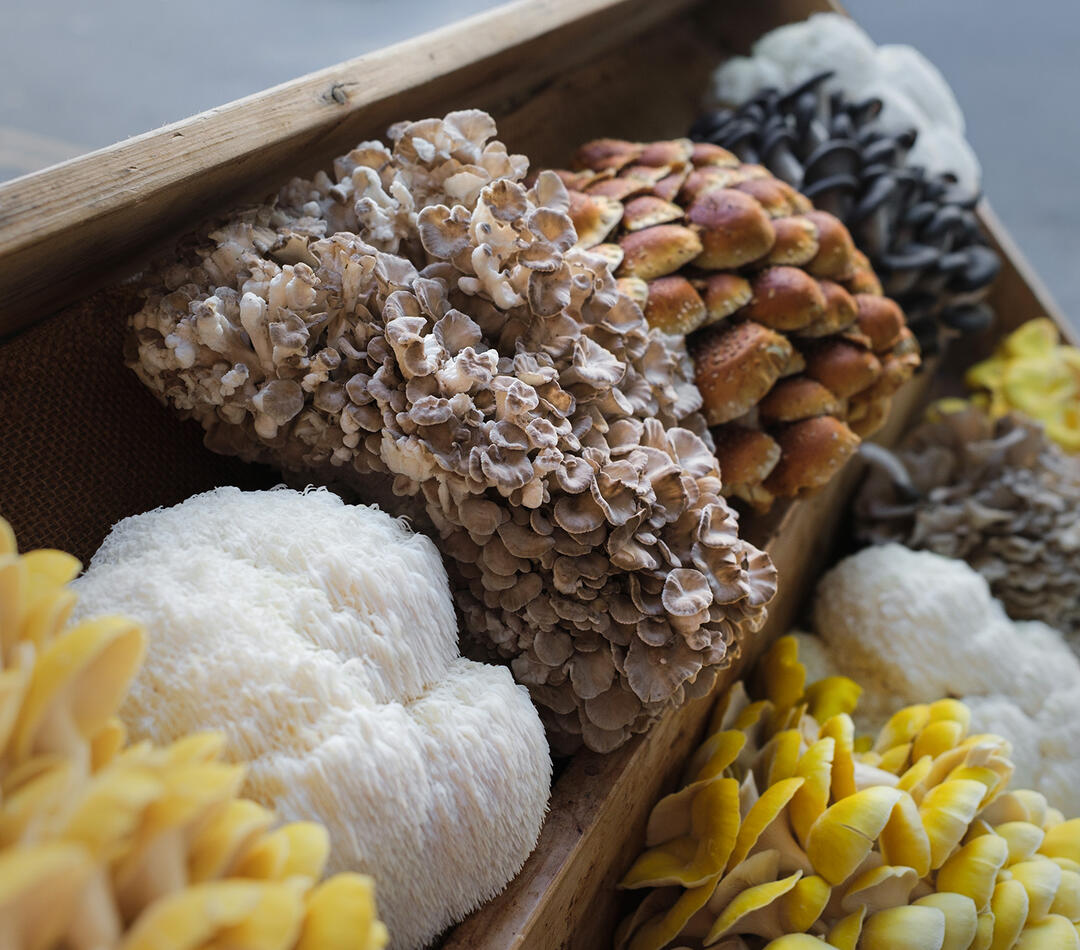
- Māhealani Farms // Maitake and Blue Oyster Mushrooms
- Windrose Farm // Garlic
- Coleman Family Farms // Thyme, Garlic
- McGrath Family Farms // Parsley
- JJ's Lone Daughter Ranch // Lemon
- Polito Family Farms // Lemon
Tools
My Favorite Cooking Tools spotlights the kitchen equipment I’ve owned and used for years from bread baking to coffee brewing.
Ingredients (Serves 4)
- 5 slices of thick-cut sourdough bread, about 170 grams (6 ounces)
- 42 grams (3 tablespoons) extra-virgin olive oil, divided, plus more for toasting the bread
- 455 grams (16 ounces) mushrooms, measured after prep Note: The recipe suggests nameko, hen of the woods, chanterelle, porcini, or matsutake. I use blue oyster and hen of the woods (maitake).
- 43 grams (1 1/2 ounces) garlic confit, sliced Note: The Gjelina recipe for garlic confit is here. I often have the spent garlic confit from Union Square Cafe's spinach linguine in the freezer. It works well for this dish and has a little heat.
- Flaky sea salt
- Freshly ground black pepper
- 115 grams (4 ounces) dry white wine such as sauvignon blanc
- 290 grams (10 ounces) crème fraîche Note: See Original vs. Adapted
- 2 tablespoons flat-leaf parsley, chopped, measured after prep
- 1 teaspoon fresh thyme leaves, gently chopped
- Optional: Lemon zest Note: See Original vs. Adapted
Instructions (Adapted from Gjelina)
Mise en Place
- Line a baking sheet with foil and grab a wire cooling rack.
- Turn the broiler on high and move a shelf to the middle and upper positions. It should be heated for about 10 minutes before proceeding with the toasting.
- Cut the mushrooms into similarly-sized pieces. I like them to be big enough to feel meaty and substantial, but small enough to ensure good surface contact with the pan. This is a knife and fork dish so you're not looking for too many little bits.
- Chop the herbs and measure out the rest of your ingredients.
Broil
- Place the 5 slices of bread on the baking sheet and brush with some olive oil (not the 3 tablespoons—that's set aside for the mushrooms). Broil on the middle shelf until starting to toast, then move to the top shelf to kiss the bread with some char. Babysit this process and pull the slices as they reach your desired doneness. I like a deeply browned edge—the smokiness of well-toasted bread with the creamy mushroom sauce is part of this dish's mojo.
- Transfer the toasted bread to the wire rack so it doesn’t sweat. For the love of texture, don't set the hot bread on a plate.
Cook the Mushrooms
- Heat a 12-inch stainless steel pan (preferably with sloped sides) or similar over medium-high heat. Once hot, add 1 1/2 tablespoons of olive oil—it should slither and dance around the pan but not smoke. If you aren't sure on the timing, put a little oil in the pan while heating as your indicator.
To prevent steaming, it's best to cook the mushrooms in two batches so that's how the following steps are written.
- Add half (228 grams/8 ounces) of the mushrooms in a single layer, press them down gently with a spatula to ensure good surface contact, then cook undisturbed until they are deep golden brown—about 3 minutes.
- Toss the mushrooms, spread into a single layer, then gently press them down again and cook for another couple of minutes. With some mushrooms, I find that tossing them seems to unlock their structure and all of a sudden the liquid is set free. I turn the heat up a little to make sure that moisture is being driven off—the pan should be sputtering and hissing throughout the process. See Around the Dinner Table above for a deeper dive into the method.
- Once sufficiently browned (about 5 minutes), spread the first batch out on a plate and repeat the process with the remaining mushrooms and 1 1/2 tablespoons of olive oil.
- When the second batch is browned, briefly move the pan off the heat and add the 1 1/2 ounces of garlic confit plus the first batch of mushrooms. Season with some freshly ground pepper and sea salt then taste the mushrooms. They should be intensely delicious on their own since crème fraîche is about to enter the mix. Be efficient with this step since the mushrooms are still cooking in that hot pan.
Finish
- Move the pan back to the heat and add the 115 grams (4 ounces) of wine, then cook and stir until it's mostly reduced—this goes quickly.
- Add the 290 grams (10 ounces) of crème fraîche, 1 1/2 tablespoons of the parsley (reserving the rest for garnish), and the 1 teaspoon of thyme. Stir frequently while the sauce simmers and thickens slightly. You want it to be saucy but not overly runny. The picture at the top shows my first attempt, which came out a little drier since I was short on crème fraîche—more on that under Recipe Tips.
- Taste again and adjust with sea salt, freshly ground pepper, and a few scrapings of lemon zest (if using). The flavor of the mushrooms will be front and center when you hit the right balance but watch the lemon as it can take over. The citrus should be whispering in the background.
- Plate the bread, top with the creamy mushrooms, and finish with the remaining 1/2 tablespoon of parsley. This dish is its best self when still warm.
Newsletter
Subscribe at the bottom of this page for the Chic Eats roundup. It includes new and updated recipes along with a grab bag of unique content that was interesting enough to share around the dinner table.