Spicy Basil Pesto
RECIPE UPDATED 7/24/2024
Newsletter
Subscribe at the bottom of this page for the Chic Eats roundup. It includes new and updated recipes along with a grab bag of unique content that was interesting enough to share around the dinner table.
Pesto
Basil pesto is a spring/summer staple that I always look forward to making. The original version of this recipe included a blanching step (to keep the basil bright green), but I've adopted a new method and no longer blanch. The pesto is always bright and beautiful and the process is a bit less fussy. More on that below.
Around the Dinner Table
- Basil has a pretty good resume. The level of flavonoids (antioxidants) is higher than in spinach and broccoli. If flavonoids don't get you excited I don't know what will. It has also been suggested that the volatile oils in basil help fight bacteria, chronic diseases, and viruses, as well as lower blood pressure.
- The word "pesto" comes from "pestare", which means to crush or grind, as with a pestle. I make pesto in the food processor (UPDATE: now it's the blender), but purists feel that to truly mash up the oils and flavor a mortar and pestle is the way to go. Pesto made by hand is in fact a more nuanced sauce and I try to go that route when time allows. Some recipes call for bruising the leaves before putting them in a machine which is a compromise of sorts. With pesto I have a "pick a lane" attitude -- all by hand or quick in a machine. You can get acceptable results with a blender or food processor so that's what I went with below.
- Pesto made its first formal appearance in the 1860 cookbook, La Cuciniera Genovese, which came out of the Liguria region of northern Italy. Traditional Pesto Genovese is specific in that it includes Genovese basil, garlic, Italian pine nuts, Parmigiano Reggiano or Grana Padano, and Ligurian extra-virgin olive oil. In 2011, the Pesto alla Genovese consortium was founded to establish the rules and guidelines for this dish. Italians do not mess around when it comes to cheese, wine, and pasta. They're good people.
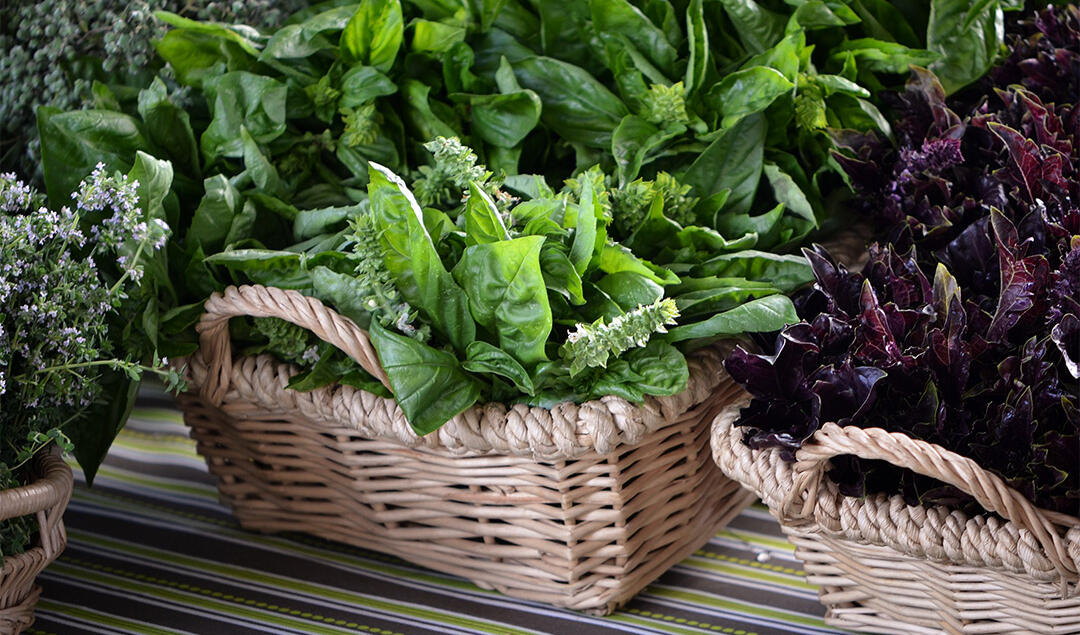
Fresh Basil at Schaner Farms - Santa Monica Farmers Market
Recipe Tip
- Basil pesto is better after it has some time to set up so making it the day before is recommended.
Tools
- Food Processor or Blender
- BPA-free storage containers
- Scale
Ingredients
- 60 grams (2 ounces/about 2 gently packed cups) fresh basil leaves
- 35 grams (1 1/8 ounces/scant 1/3 cup) pine nuts
- 7 grams garlic (1 clove), peeled and roughly chopped
- 1.8-2.7 grams (1/2 to 3/4 teaspoon) flake sea salt plus extra for adjustments
- A few cranks of freshly ground pepper
- 1 ice cube
- 112 grams (1/2 cup) quality olive oil plus a glug or two if needed SPICY OPTION: Substitute 45 grams (3 tablespoons) Chili Oil
- 35 grams (3 tablespoons) finely gated Parmigiano Reggiano NOTE: If you plan to freeze this sauce, I recommend adding the cheese after you defrost it. Dairy doesn't always freeze well.
- 15 grams (about 1 1/2 tablespoons) finely grated Pecorino Romano NOTE: Fiore Sardo is recommended for pesto if available. I did a deeper dive on Pecornio in Lilia's Mafaldine with Pink Peppercorns.
Instructions
UPDATE: I don't blanch the basil anymore.
Blanching
Set up a bowl of ice and water.Boil some water in a sauce pan, then blanch your washed basil for 10-15 seconds.Quickly transfer to the ice bath, then drain and spread the basil in an even layer on some paper towels.Dry the basil thoroughly.
Basil Prep
- Wash the basil, pat with paper towels, then lay it out flat so the leaves can continue to air dry.
Pine Nuts
- In a small pan, toast the pine nuts over medium heat until they've taken on a little color and are fragrant. Set aside to cool completely.
Pesto
- Add the cooled pine nuts, basil, garlic, salt, pepper, and ice cube to your food processor or blender. Pulse until the texture is somewhat even. In a blender, I add some of the olive oil to get things moving.
- While the food processor is running, pour the oil through the opening, scraping down the sides a couple times. In the blender, you may need an extra glug or two of olive oil for the pesto to process smoothly.
- Transfer to a storage container, stir in the cheese(s) and adjust the salt to your liking. Before putting the lid on, lay a small piece of plastic wrap on the top of the pesto to minimize oxidization or drizzle with a bit of olive oil.
- Store in the refrigerator overnight to marry the flavors.
Serving Suggestions
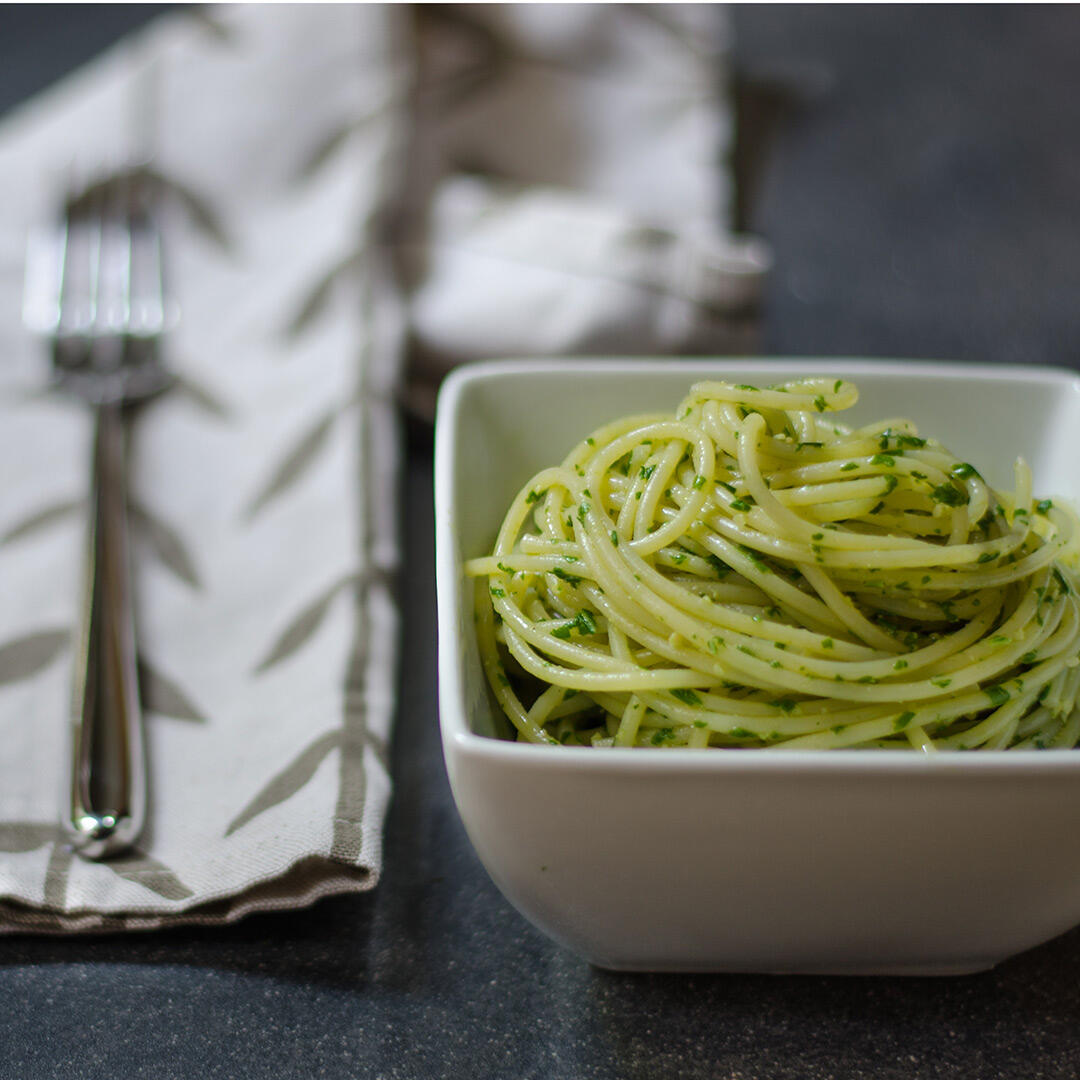
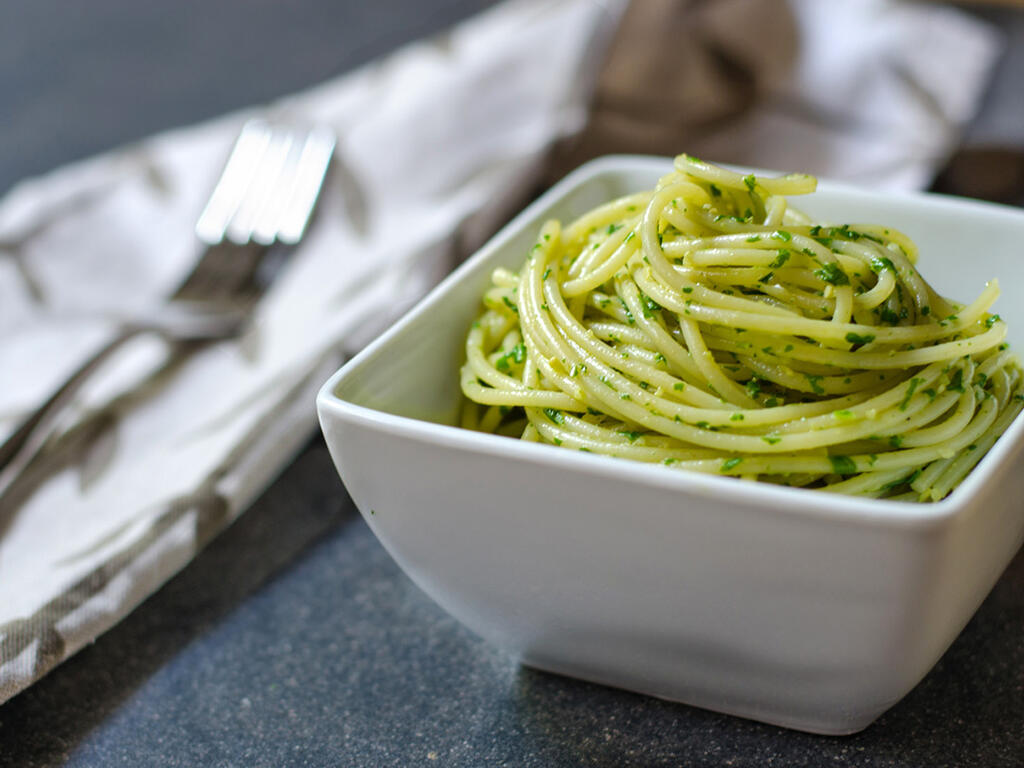
This recipe works with 8 oz of pasta (3 tbsp of pesto/4 oz pasta). The pasta in these photos only had 2 tbsp of pesto/4oz, so your dish should be even greener.
Newsletter
Subscribe at the bottom of this page for the Chic Eats roundup. It includes new and updated recipes along with a grab bag of unique content that was interesting enough to share around the dinner table.