Sourdough Focaccia with Sun-dried Tomato, Rosemary & Basil Pesto

Newsletter
Subscribe at the bottom of this page for the Chic Eats roundup. It includes new and updated recipes along with a grab bag of unique content that was interesting enough to share around the dinner table.
Focaccia
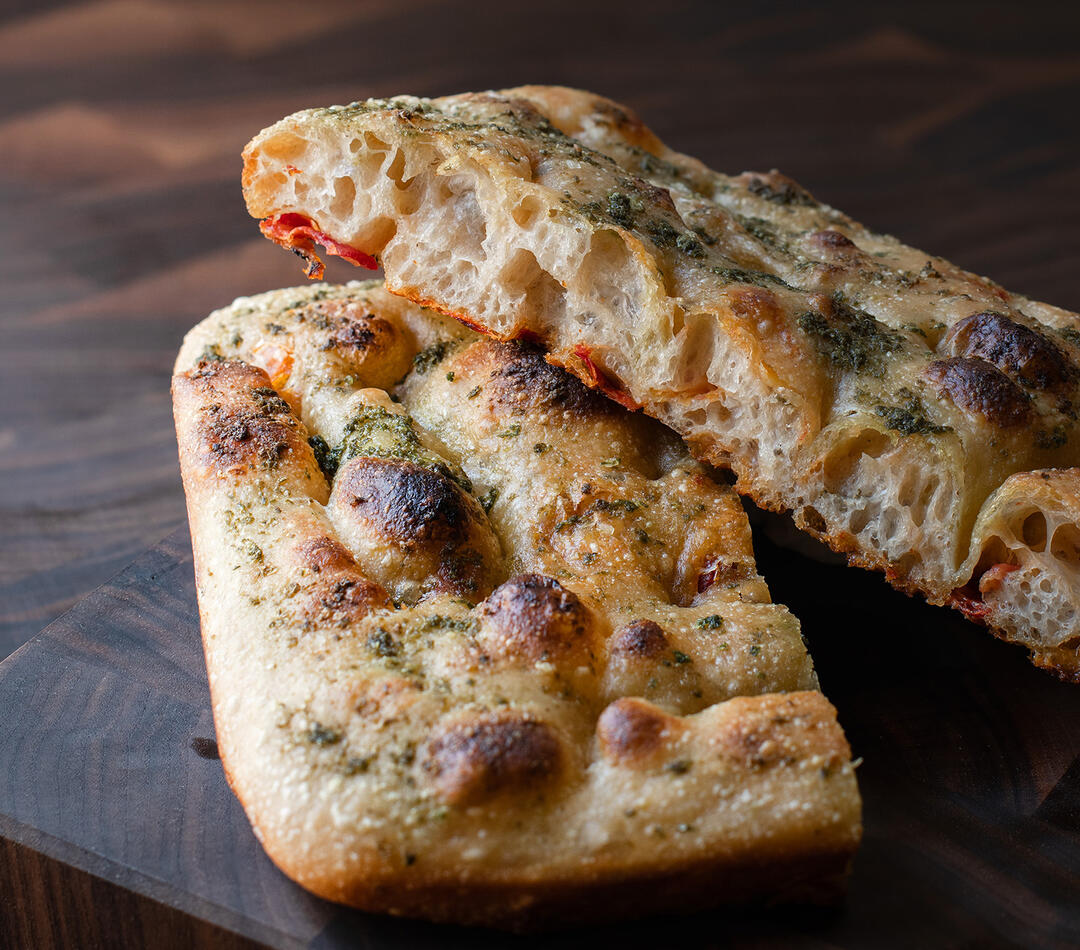
Back in July, the table bread at NYC's Gramercy Tavern was a focaccia made with sun-dried tomatoes, rosemary, and then finished with herb oil baked on top. Maybe it was the great meal or memorable weather melting everything in my purse, but that bread ended up bookmarked in my mind.
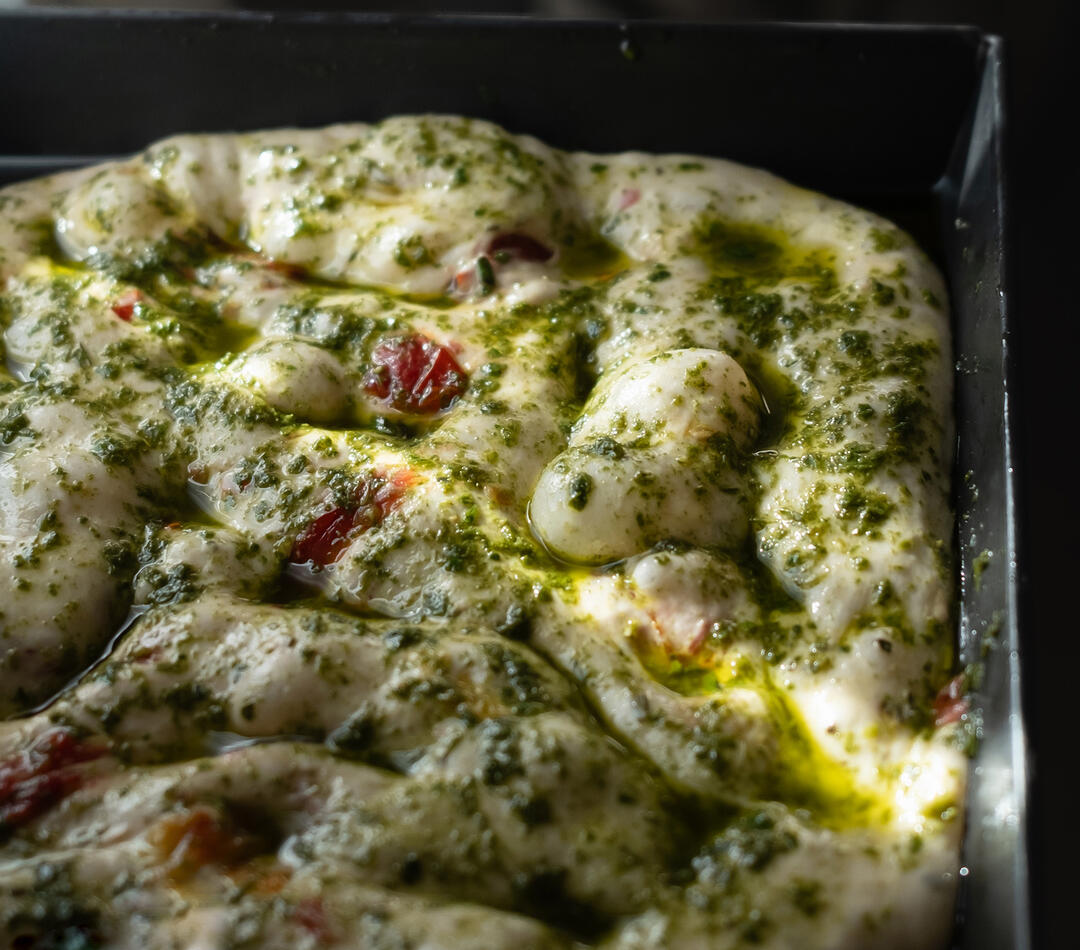
When I arrived home to the West coast, the Tavern's combo turned into an instant favorite that I've made at least six times. Olive oil gives the bottom a buttery crispness which pairs perfectly with the airy crumb and bright umami of the sun-dried tomatoes (thoroughly roasted tomatoes also work). Basil pesto and rosemary contribute just enough herbaceousness to round out the flavor. The bread is outstanding plain but truly shines when topped with avocado, a runny fried egg, and dash of hot sauce for breakfast.
A bonus with this recipe is that it can be made with leftover dough. I wanted to make Roman-style pizza so I split the full Sourdough Sicilian Pizza recipe into two pieces, baking the smaller one in a 9" round or 8" square pan to get the results seen in this post. That said, I wrote the instructions with the assumption that some people will want to make focaccia but not pizza and may even have different pan sizes. A chart with several options is included below along with baker's percentages to help you scale.
And before we continue on, a brief digression to say that sun-dried tomatoes are criminally underrated. I recognize they were overused in the 80s/90s plus the oil-packed variety can be pretty disappointing. That said, dried tomatoes have more umami than their fresh counterparts which makes them a sweet and savory powerhouse. I intend to be the cheerleader nobody asked for—more on buying and hydrating below.
Dispatches From My Library
In Perfect Pan Pizza, Peter Reinhart writes that focaccia and schiacciata are Ligurian and Tuscan terms for the same thing. I wasn't familiar with schiacciata, which naturally prompted me to spend an unreasonable amount of time Googling about bread. My initial search suggested that the two styles are definitely similar but, as far as I can tell, their characteristics are regionally specific. In Reinhart's defense, he acknowledges that people will probably disagree with him but is unapologetically blazing his own trail. Fair enough. Then I started wondering about the bread in this post. With a modest height—shorter than what’s typically called 'focaccia' in the U.S.—it doesn’t resemble styles from Liguria or Tuscany…so is it even focaccia?
I recognize that attempting to answer that question is as foolish as trying to identify the one true lasagna. Chasing "authentic" can be problematic for a number of reasons, but curiosity won out and down the rabbit hole I went.
Italy has a resolutely regional food culture and few genuinely national bread styles. - Bread Matters
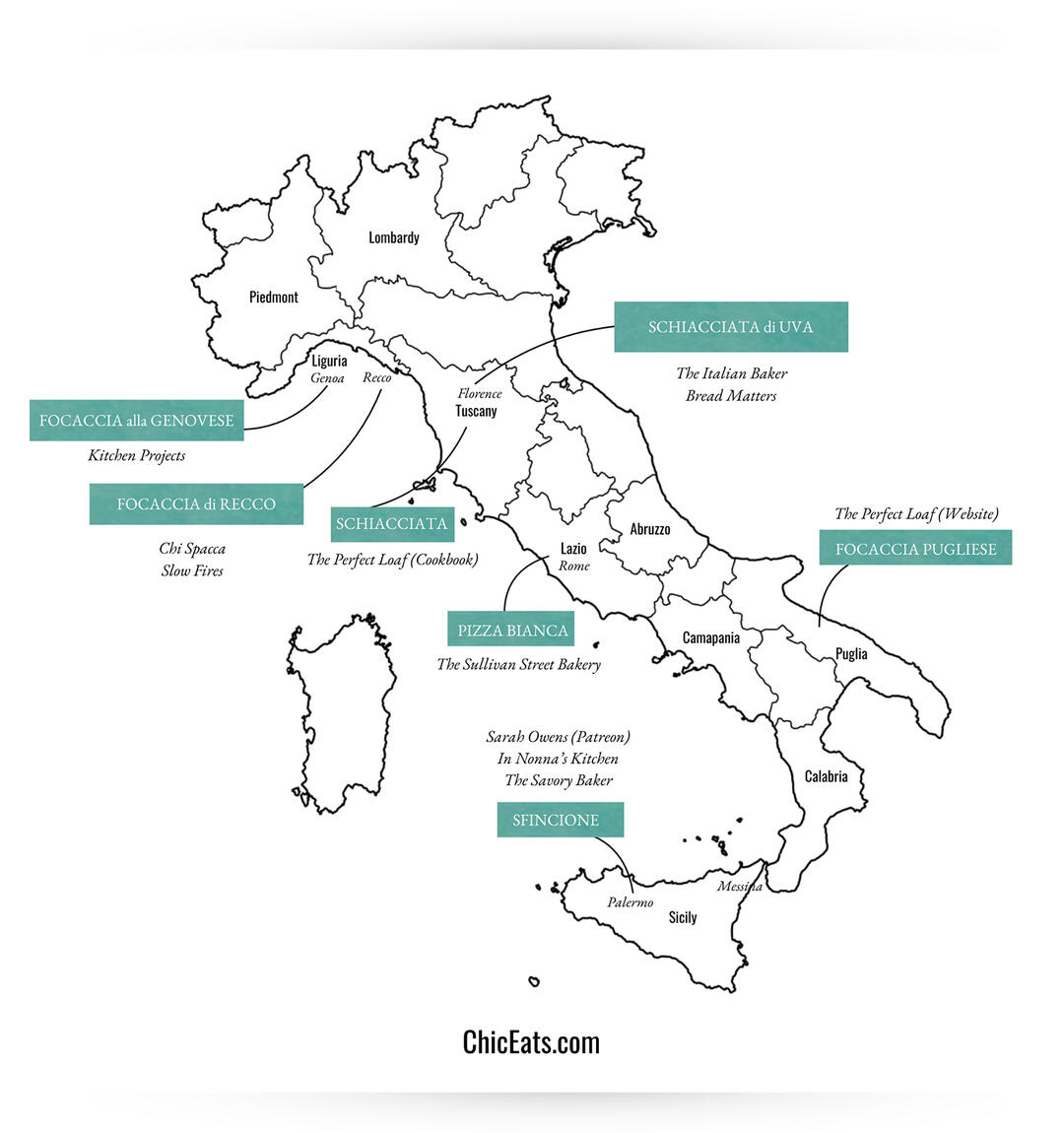
Though my quest was somewhat inconclusive, it left me with a treasure trove of recipes to share. Among them: Sfincione, Schiacciata, Focaccia di Recco, Focaccia alla Genovese, and Focaccia Pugliese. The respective cookbooks and websites are all linked in the next section.
You Say Focaccia, I Say Schiacciata
What the Tuscans call schiacciata, their Genovese neighbors to the north call focaccia. Those to the south, in Naples and Rome, favor the word pizza. - Crust and Crumb
My virtual tour of Italy’s focacciarias quickly taught me that "focaccia" is more of an umbrella category than a singular style. Ask for schiacciata in Tuscany, focaccia di Recco in Liguria, or sfincione in Sicily, and you'll get distinct local creations that are all offshoots from the same root. A similar observation can be made about many beloved regional dishes, especially when considered outside the “authoritative” food media lens.
It Began in The North
Genoa, in Liguria, is often mentioned as the birthplace of Italian focaccia so that’s where I began. Made by pressing "firm fingerprints" into the dough, it's as if a Club cracker dreamed of being bread. The lower hydration, slight height (less than ¾-inch or 2 cm), and crunchy oily top—thanks to a brine of water and oil that’s poured over the surface—lend a defining texture. The modest crumb offers some chewy contrast but it's by no means the “bready” style common in the U.S. Kitchen Projects (paywall) has a great deep dive on Ligurian focaccia along with a recipe that I want to try—the oil and water brine is especially interesting.
The simple joy of dipping warm oily focaccia into a hot frothy cappuccino - the quintessential Ligurian breakfast - cannot be underestimated. - Kitchen Projects
Schiacciata, the initial spark for this tour, hails from Tuscany and there’s no mistaking how its oily and crispy top is similar to focaccia alla Genovese. While Genoa’s style is more of a dipping and snacking bread, schiacciata's slightly more substantial crumb gives it excellent sandwich potential. The Perfect Loaf's author is both a passionate sourdough baker and Italian so his version is probably a good one to try.
Even though my intention is to accurately represent the different styles of bread, I’m still generalizing given all the variations of schiacciata. One example is Schiacciata con l'Uva (or di Uva/ all'Uva) which is sweetened and includes grapes, raisins, and wine. Recipes can be found in Bread Matters and The Italian Baker.
Before leaving the north, I’m obligated to mention Recco, a town just 30 minutes from Genoa. Focaccia di Recco further redefines any preconceived notions I had with its two tissue-thin pieces of dough baked snugly around dollops of cheese—like a molten grilled cheese made with flatbread crackers. It's a Los Angeles legend thanks to Nancy Silverton’s Chi Spacca, and their video has me ready to jump into a weekend project. There are recipes in both Chi Spacca and Slow Fires, the latter actually being a take on Nancy's Silverton's recipe.
The Eternal Crumb
Romans eat pizza bianca, white pizza sprinkled only with oil and salt, in the morning the way Florentines eat schiacciata and other northern Italians snack on focaccia. - The Italian Baker
Rome’s Pizza Bianca, sparingly dressed with oil, sea salt, and optional rosemary, has a more open texture than its Genovese counterpart and had the most similar aesthetic to my recipe. If you’re a baker without a Jim Lahey book, now is a good opportunity to fix that. The Sullivan Street Bakery Cookbook features a couple of Pizza Bianca recipes along with plenty of essential wisdom.
At this point I was ready to give it a rest, but then the spongy tomato-topped bread of Sicily called me onward to the south.
Home is Where the Big Crumb Is
While northern focaccia styles felt less familiar, the generous toppings and lofty crumbs of Southern Italy—so influential to Italian-American cuisine—felt like home. It’s hard not to see the resemblance between deep dish pizza in the U.S. and Palermo, Sicily’s sfincione. The bread stands around an inch tall and is topped with an umami-laden sauce of tomatoes, sardines, and onions, then is finished with caciocavallo and breadcrumbs. Messina, Sicily's, iteration features escarole, tomatoes, and tuma cheese. A few resources for sfincione recipes include Sarah Owens’ recent sourdough rendition (paywall), Carol Field’s In Nonna’s Kitchen, and Evan Kleiman’s Angeli Cafe: Pizza Pasta Panini. For the dough, I may just fork my Sourdough Sicilian recipe and sub in a bit of durum.
Speaking of durum, that flour is often used in southern Italian breads like sfincione and Focaccia Pugliese, the latter even incorporating potato into the dough. Durum can make pizza crispier and lend a more dynamic color and flavor—some describe it as nutty—but there are process adjustments to keep in mind. The Perfect Loaf website offers tips here and also features a fantastic-looking recipe for Focaccia Pugliese.
We have found a sensible stopping point (for now), which brings us full circle to my recipe.
La Mia Focaccia
As already mentioned, the recipe in this post seems most similar to Pizza Bianca with a less crispy top. My bread has a higher hydration and respectable height but is by no means flashy. The same adapted Sourdough Sicilian dough works as Roman-style pizza, sourdough Sicilian, and focaccia, with pan sizes and fermentation times adjusted accordingly. Purists may balk at this multi-purpose approach, but several cookbooks follow a similar method including The Sullivan Street Bakery Cookbook, Perfect Pan Pizza, and Modernist Bread to name a few. With hundreds of regional styles you have to start somewhere.
Food is a journey, not a destination
Recipe Tips
Sun-dried Tomatoes
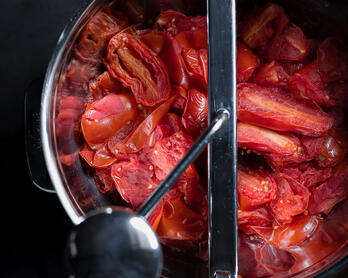
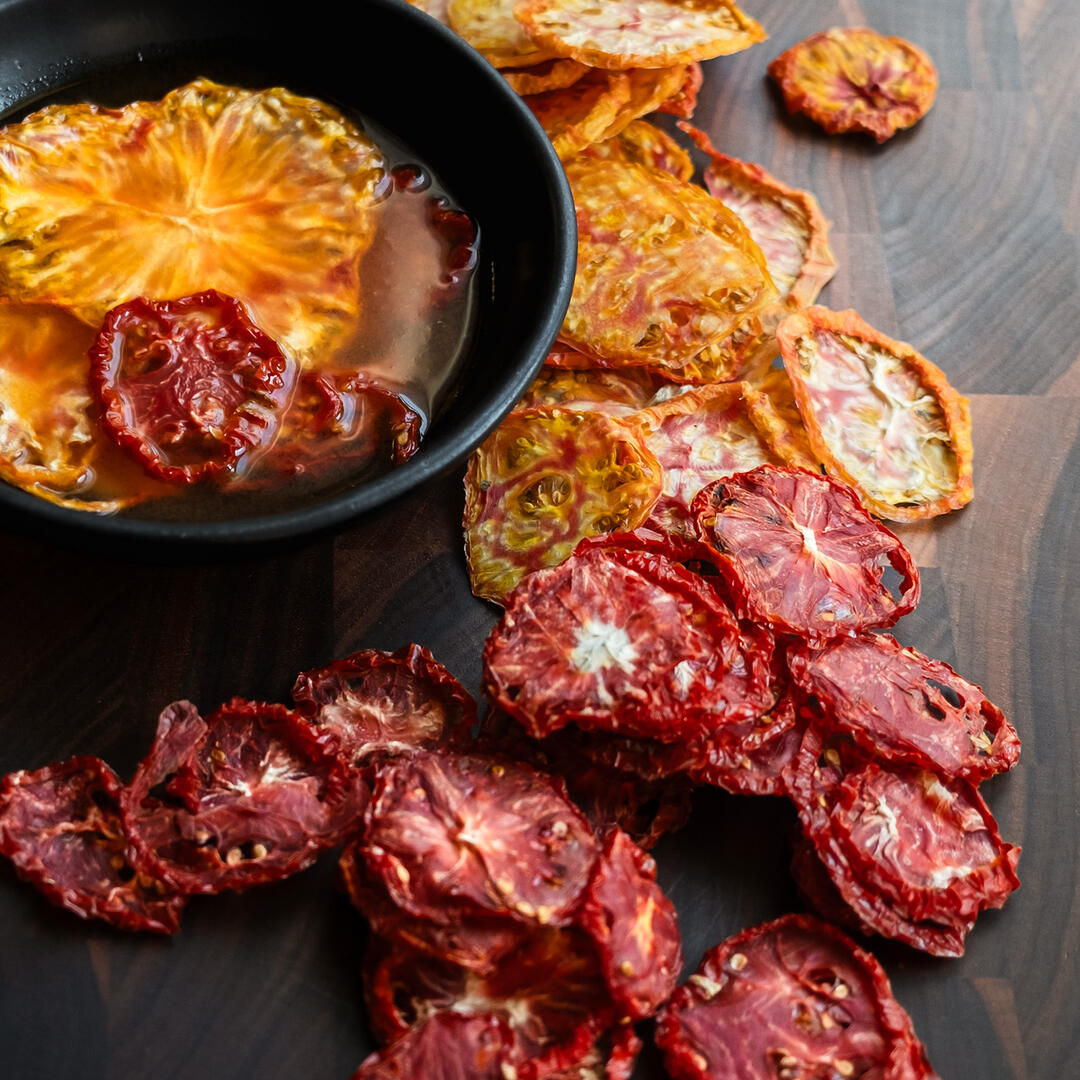
I have thrown away a tragic number of jarred sun-dried tomatoes. Whether it's the quality of the oil, the tomatoes, or both, my luck with those products hasn't been great. Now I just buy the dry variety at the farmers market and rehydrate the slices as needed. Rehydrating tomatoes in tomato water is win-win since the soaking liquid becomes a supercharged component. It freezes well and adds incredible flavor to vegetables, stir-fries, risotto, or any dish where you might need a couple tablespoons of hydration. If your farmers market doesn't carry them, searching for "dried tomatoes organic farm" should yield several options online.
Farmers | Artisans
I make an effort to source my food from California artisans with a special focus on the Santa Monica Farmers Market. Below is a list of the people who contributed to this dish.
- Coleman Family Farms // Rosemary
- Windrose Farm // Rosemary
- Munak Family Farms // Sun-dried Tomatoes
- Frecker Farms // Basil
- Katz Farm // Olive Oil
Tools & Charts
Pan Sizes & Color
As mentioned at the top, for Roman-style pizza, I split my Sourdough Sicilian recipe (1106 grams/39 ounces of dough) into two portions: 794 grams/28 ounces (for the pizza) and 312 grams/11 ounces (for the baby focaccia seen in this post). The pictures in this post show 312 grams of dough baked off in an 8" square pan and 9" round pan.
You may want to skip the pizza and just make focaccia. The chart below lists the pan sizes I use and the corresponding dough weights needed to achieve the desired crumb height.
For the chart:
- "Taller Crumb" refers to the height shown in the Sourdough Sicilian post.
- "Shorter Crumb" matches what you see in this post.
The brand I prefer is Lloyd and I own all of the sizes listed in the chart. For many years, I used a dark grey jelly-roll pan for my Sourdough Sicilian before switching to pans specifically designed for pizza. The loft, crust, and ease of cleanup are unmatched so it's worth the investment. In terms of color, I've tried both gold and dark grey and the latter is a clear winner when it comes to crust development. 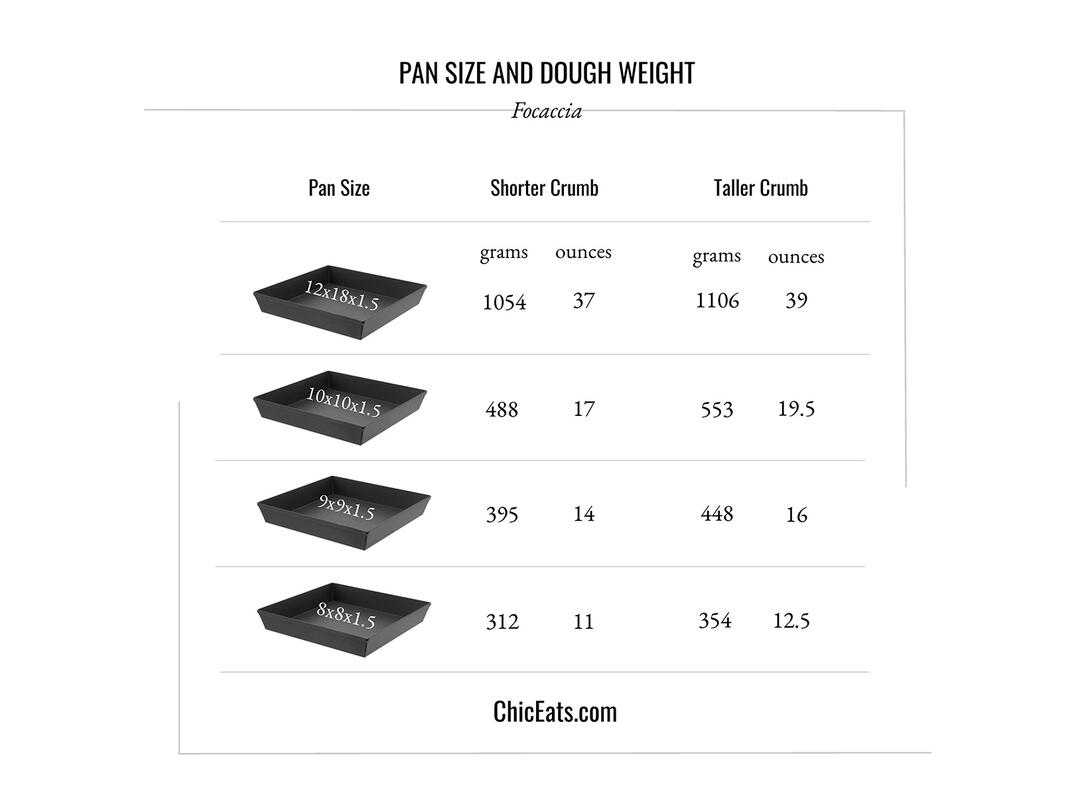
Other Tools...
- Mini Measuring Cup - I’ve purchased five of these for the Airstream and home. They’re handy for everything from the ubiquitous "2 tablespoons of olive oil in the pan" to Scratch Margaritas.
- Shun Cooking Shears - These shears were part of a knife set that I received over 10 years ago. Lucky for me that they work great and also happen to be highly rated. The handle has a helpful texture and the blades come apart for easy cleaning. An essential tool for cutting focaccia or pizza.
- Cooling Rack - Though I have both wire and mesh cooling racks, I'm partial to the wired since there are fewer nooks and crannies to clean.
- Silicone Gloves - I have multiple pairs of these and they work well for everything from pizza to Sourdough Bread. Fabric gloves can't handle a 500°F pan, but silicone offers both heat resistance and dexterity.
My Favorite Cooking Tools spotlights the kitchen equipment I’ve owned and used for years from bread baking to coffee brewing.
Ingredients
The recipe below assumes you're making the Sourdough Sicilian Pizza recipe and splitting it to make both focaccia and Roman-style pizza. If you only want to make focaccia, refer to Tools & Charts above for pan sizes and dough weights, then scale the inclusions, olive oil, and toppings accordingly per the baker's percentages listed. (For example: A half portion of the Sourdough Sicilian dough in a 10x10 pan will result in focaccia with a tall crumb.) Always happy to answer questions so feel free to leave a comment or send a note.
Inclusions, Shaping, and Stretching
- 312 grams (11 ounces) Sourdough Sicilian dough || 100% Note: See header note regarding dough weight.
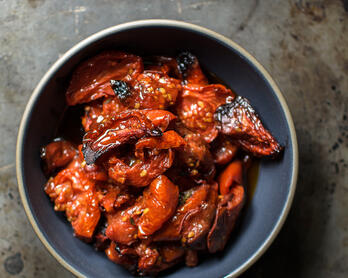
- 35 grams (1 1/4 ounces) rehydrated sun-dried tomatoes, patted dry (measured after prep) || 11.2 % Note: The instructions for rehydrating sun-dried tomatoes are below. I've also used 35 grams of roasted tomatoes then combined the basil pesto with the oil from the roasted tomatoes for some extra layers of flavor.
- 2 grams (2 teaspoons) minced rosemary (measured after prep) || 0.6%
- 18 grams (1 tablespoon + 1 teaspoon) quality olive oil || 5.8%
Toppings
- 10 grams (2 teaspoons) basil pesto || 3.2% Note: I used pesto that's stored in the freezer so it doesn't include any cheese.
- 5 to 10 grams (1 to 2 teaspoons) quality olive oil || 1.6% to 3.2%
- Optional: 15 grams pitted olives, halved (measured after prep) || 4.8%
- Optional: 25 grams roasted sliced red onions (measured after prep) || 8%
Instructions
Day 1 - Dough
Follow the Sourdough Sicilian Pizza dough instructions until you reach "Stretch/fold #2 is complete". At this point, split the dough if you're making both pizza and focaccia. When making Roman-style pizza, I divide the dough into 794 grams/28 ounces (pizza) and 312 grams/11 ounces (focaccia). Once portioned out, place in separate bowls and proceed with the remaining strengthening and refrigeration steps.
If you only want to make focaccia, make your preferred amount of dough per the instructions in the Sourdough Sicilian Pizza recipe. Refer to Tools & Charts above for pan sizes and dough weights.
Day 2 - Add Inclusions
Prep
- Set the covered bowl with the focaccia dough out at room temperature for about 45 minutes. My ambient temperature is usually 71-74°F for context.
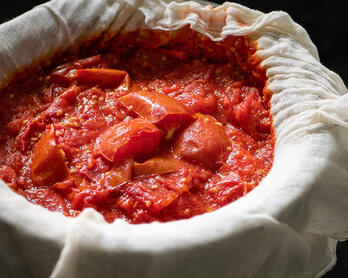
- Meanwhile, add a couple handfuls (about 90 grams/3 ounces) of dried tomatoes to a bowl along with enough hot Tomato Water (about 180 grams/12 ounces) so they're submerged. Weigh the tomatoes down with a small plate if needed, then cover the bowl tightly and set aside until the texture has softened. Timing will depend on the tomatoes, but it usually takes 20 to 30 minutes. Note: This will yield more than is needed for a small focaccia, but rehydrated tomatoes freeze well and are outstanding to have on hand for pasta dishes, pizza, and sauces. I usually rehydrate as many tomatoes as my tomato water supply will allow for.
- Drain the tomatoes, saving the supercharged soaking liquid in the refrigerator or freezer for another use.
- Blot the tomatoes dry and chop what you need for the bread.
- Finally, chop your rosemary so that you have 2 grams (2 teaspoons).
Add Inclusions
Full Proof Baking has a video here on "laminating" if you aren't familiar. This isn't the only way to add inclusions but it's tidy and how I like to do things with this particular bread. Many recipes suggest laminating/adding inclusions earlier in the process but I do it after the primary strengthening is complete and the dough doesn't seem to mind.
- Barely mist the workbench with water to prevent sticking then lift the dough out of the bowl and place it seam-side down. Using lightly dampened hands (and bench scraper as an aid if needed), gently stretch the sides out so that the dough is thin but not so thin that it's tearing—roughly 14" across for 312 grams dough and 19" across for 488 grams of dough. Note: If you accidentally tear a small hole, don't panic—just try to avoid stretching to that point. You're not looking to read a newspaper through it.
- Sprinkle about 2/3 of the rosemary and chopped rehydrated tomatoes over the surface. Fold 1/4 of the dough inward and sprinkle a little more of the inclusions on that empty section. Repeat with two more sides of the dough for the remainder of the tomatoes and rosemary. The fourth side should be folded over the dough but will be left bare since it's the top of the bread.
- Once all of the sides are folded over, gently round the dough with a bench scraper. Put it back in the bowl, cover, and refrigerate.
In all honesty, I've made a mess of that last step. One time I used too much water on my workbench and the already wet dough started tearing and disintegrating around the inclusions. If you encounter this kind of chaos, just take a breath, move the dough to a dry part of the workbench, then cover it with a towel and let the dough rest for 20 minutes. Once rested, gently scooch it into a ball to smooth things out before refrigerating. Focaccia dough is remarkably resilient.
Day 3
Shape, Final Proof, and Bake
- For an 8" square or 9" round pan, add 18 grams (1 tablespoon + 1 tsp of olive oil), spreading it around to coat the bottom. Follow the Sourdough Sicilian instructions for dimpling the dough.
- Once the dough is dimpled into place, cover and proof until the bubbles start to look translucent. In my bread proofer, 78°F dough takes at least 2 hours. The proofing will take longer if the dough is sitting at a lower ambient temperature. Pay attention to the visual cues—if the bubbles are starting to look translucent and the dough is jiggly, you're going to make good bread. The only difference between the sourdough pizza and focaccia is that I push the latter until it's a bit more fragile and inflated since it won't have to support any toppings.
- About 20 minutes before the dough is done, move the oven rack to the middle position and heat the oven to 475°F/246°C.
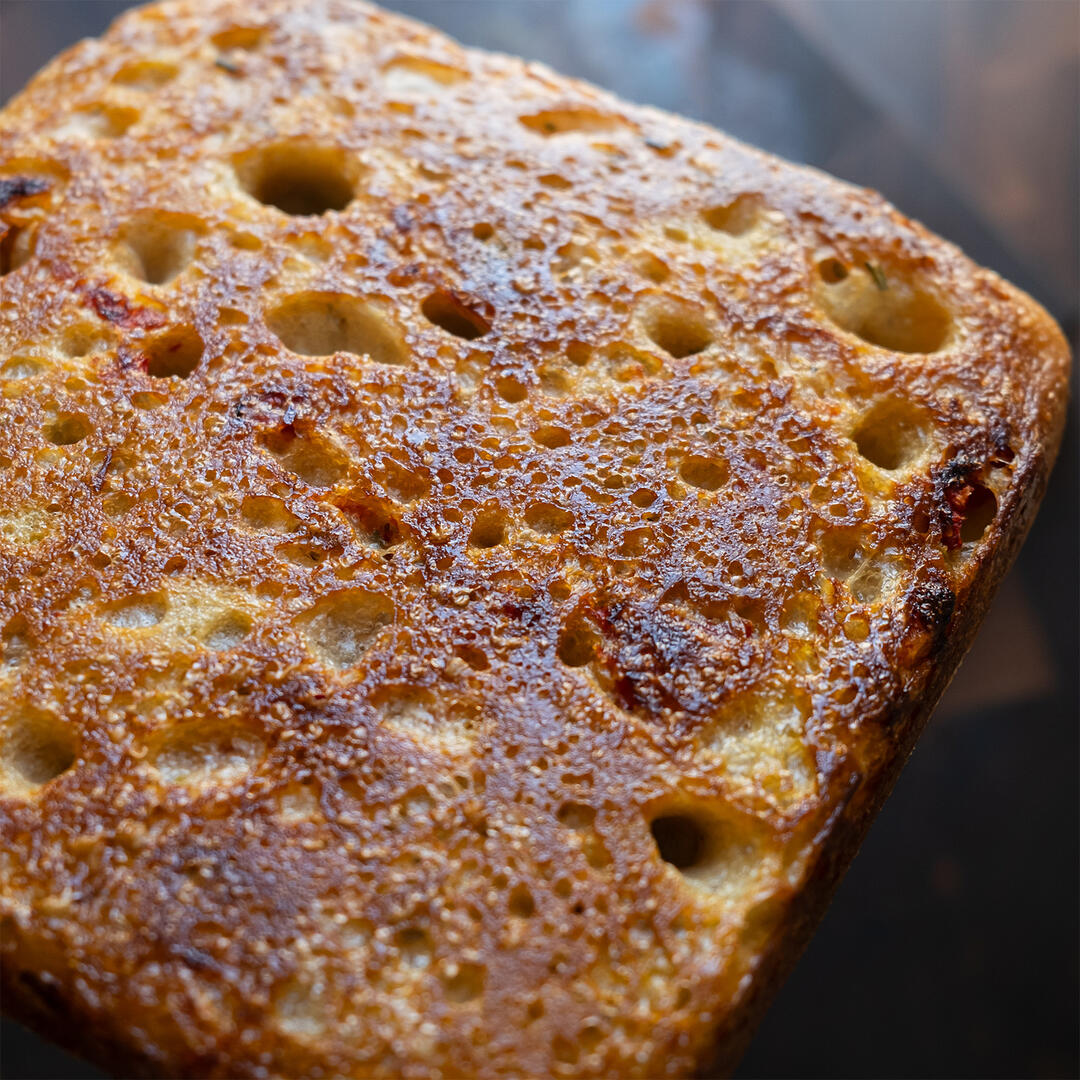
- Before the final dimpling, mix together the 10 grams (2 teaspoons) of basil pesto and 5 to 10 grams of olive oil to make it spreadable. Brush the herb oil on to the dough, then dimple with lightly oiled fingertips. Add the optional 25 grams roasted onions and/or 15 grams pitted and halved olives. Sprinkle with flaky sea salt and bake until the bottom is golden (see picture up in the post)—15 to 20 minutes. Turn the pan 180° halfway through. If any bubbles look like they're charring too much, use some of the extra basil oil and brush those so they don't burn. It's not always necessary to do this.
- Immediately transfer the baked bread to a wire rack to cool. I give the crumb at least 20 minutes to rest before cutting it with kitchen shears. Once cooled, I usually freeze the bread on the day it was baked.
Frozen Leftovers
- If possible, let the focaccia sit at room temperature for an hour before reheating. Move the oven rack to the middle position and heat to 400°F.
- Line a baking sheet with foil, slick it with olive oil, then slide the focaccia piece(s) around to ensure the bottom is coated. Bake until warmed through, about 10 minutes. The bottoms should crisp up while the bread is warming. Transfer to a wire rack until ready to serve.
- If the bottom of your focaccia is on the pale side, try tenting the top with foil and letting the bread heat a little longer until the desired color/texture is achieved.
Newsletter
Subscribe at the bottom of this page for the Chic Eats roundup. It includes new and updated recipes along with a grab bag of unique content that was interesting enough to share around the dinner table.