Gjelina's Garlic Croutons
Newsletter
Subscribe at the bottom of this page for the Chic Eats roundup. It includes new and updated recipes along with a grab bag of unique content that was interesting enough to share around the dinner table.
Scratchpad
Like many cooks, I have countless recipes that come and go from the dinner table. I jot down just about everything that I make, but most of it never reaches Chic Eats before I squirrel off to the next thing. This assortment of dishes is a bit like life—always in a state of fiddling and flux.
"Scratchpad" is a series where I share brief entries featuring some favorites from my trove of recipe scribbles. While I can't help turning some posts into food novellas à la my Sourdough Focaccia and Sauerkraut, these will be more like recipe cards.
Larders Make the World Go 'Round
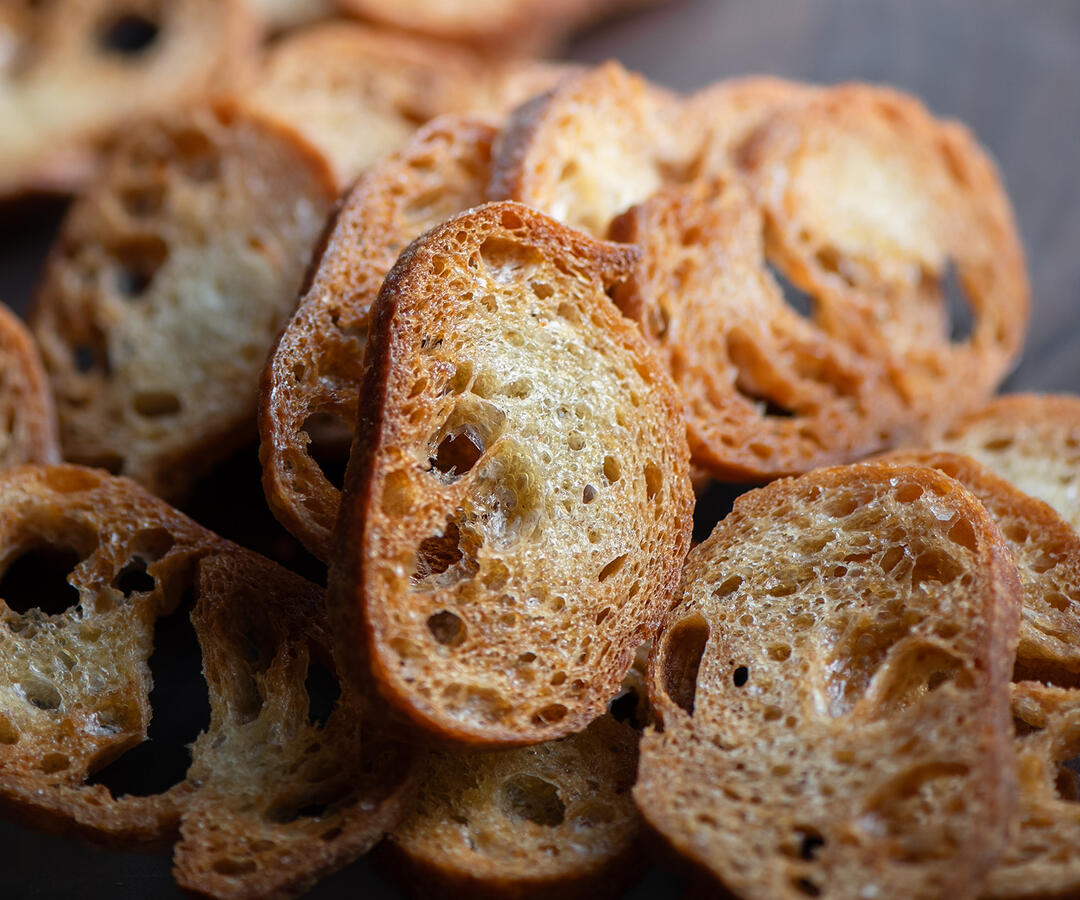
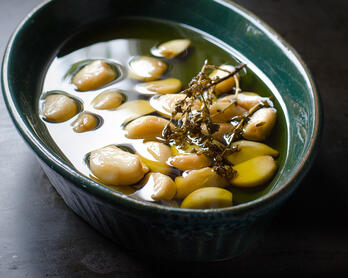
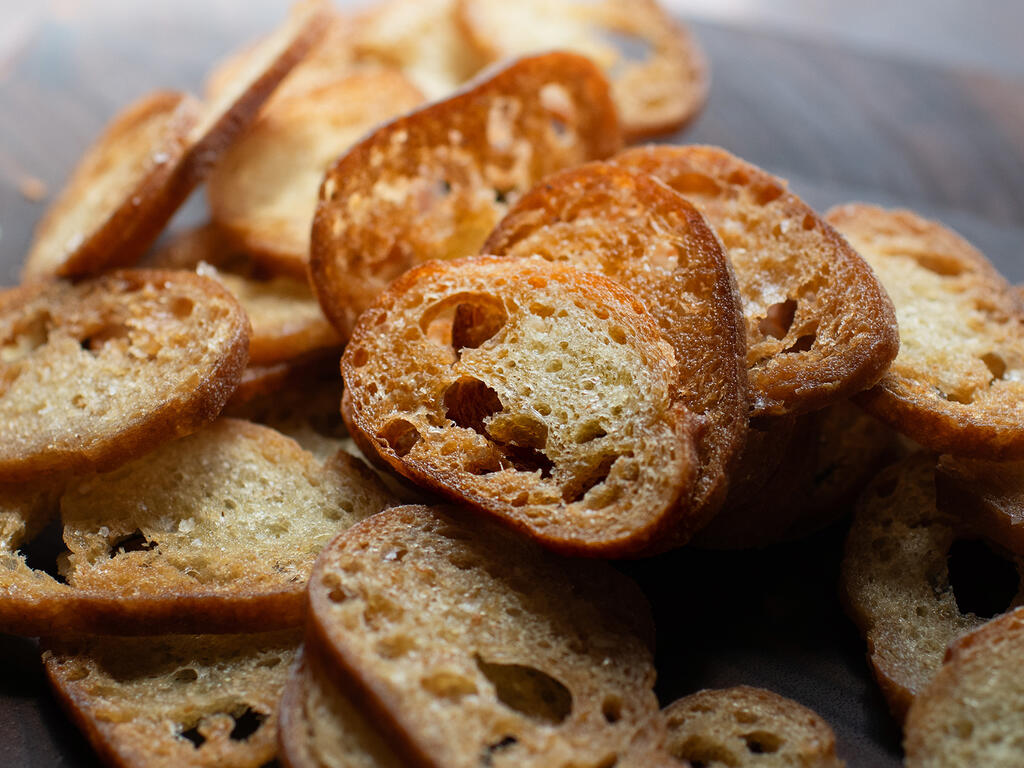
Garlic Confit and its accompanying oil are staple larder items in my freezer—a little of either can transform a dish. This recipe is simply sliced baguette that's brushed with the oil, baked, then sprinkled with a pinch of salt. The buttery crispness and soft garlic notes of these croutons defy how straightforward the process is. My salads are lost when they're missing from the mix. In addition to outstanding flavor, the croutons can last for weeks when properly stored.
Contrarian
Many crouton recipes call for stale bread. I appreciate the no-waste angle of using up old loaves, but "stale" is often the default even if the aim isn't to consume leftovers.
I've always used relatively fresh baguettes or bread that was frozen fresh. It wasn't a contrarian move—the texture and flavor just seemed preferable. I searched around looking for a tie-breaker in the stale vs. not stale debate (that nobody's having), and found this bit from Judy Rodgers:
...the bread should be fresh, or at least fresh enough to eat "as is." Really stale bread is prone to make hard, tough, dry croutons. Well-wrapped, carefully frozen (and carefully thawed) bread is a fine alternative to today’s bake.
While the internet can validate any belief, when The Zuni Café Cookbook speaks, I listen. Fresh or properly frozen bread it is.
Texture Goals
The croutons should be quite crispy. The idea is that they will absorb some salad dressing and “rehydrate,” creating a cohesive dish. When the croutons are undercooked and have soft spots, the texture reads more stale than crisp.
Inspiration Tree
This recipe is gently adapted from Gjelina's Bloomsdale Spinach Salad, which is excellent and also worth trying—one of my VIP cookbooks.
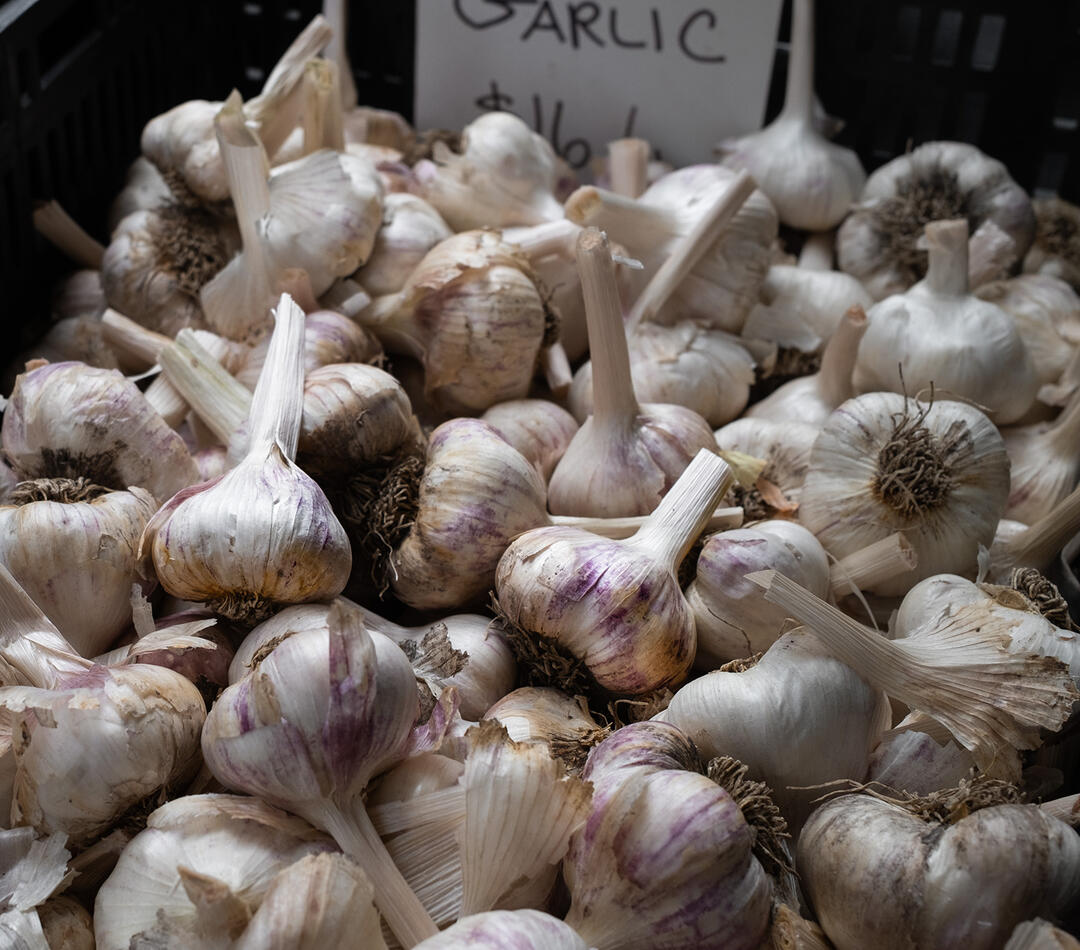
Garlic at Windrose Farms // Santa Monica Farmers Market
Tools & Tips
I use silicone pastry brushes and learned the hard way that they retain odors from garlic oil and pizza sauce. Feels like an obvious tip, but placing a piece of colored tape on the handles of the "savory" brushes and then storing them facing the opposite direction helps me reach for the right one.
My Favorite Cooking Tools spotlights the gear that I've owned and used for years, everything from bread baking to coffee brewing.
Ingredients (yields two to three dozen croutons)
For scaling, the rough ratio is 1 ounce of oil for every 1.5 ounces of sliced bread.
- 1/3 of a fresh baguette (approximately 90 grams / 3 ounces)
- 60 grams (approximately 2 ounces) garlic confit oil Note: I sometimes have spicy garlic oil in the freezer and it's particularly good for croutons.
- Flaky sea salt Note: My current brand is Jacobsen.
Instructions (adapted from Gjelina)
- Line a baking sheet with foil, then place a piece of parchment on top. Note: The foil is a personal preference since it makes cleanup easy.
- Line a second baking sheet with foil and a layer of paper towels for cooling the croutons.
- Slice the baguette into pieces that are 1/8 inch to just shy of a 1/4 inch thick. For reference, 1/3 of the baguette I usually buy yields 80 to 90 grams (2 3/4 to 3 1/8 ounces) of cut bread, which is roughly three dozen croutons. This amount fits on one pan.
- Heat the oven to 350°F/180°C.
- Arrange the baguette slices on the parchment-lined baking sheet and brush both sides with oil. Note: Don’t be shy with the oil. You want the bread to be soaked through (but not drowning) so those babies can fry.
- Bake until fully crisped, 9 to 14 minutes. Note: Unless you have the slicing precision of a machine, the croutons may not finish at the same time. I find that the thinner pieces are done around 9 minutes. If you use stale/older bread, expect a shorter cooking time.
- Transfer the croutons to the baking sheet lined with paper towels. When cool enough, taste a crouton and see if it needs another small pinch of salt. Fat can have a dulling effect on flavor so you need just enough salt to make things pop.
- Cool completely, then store at room temperature in an airtight container. Note: I tear a paper towel into pieces and then layer that between handfuls of croutons. I usually opt for quart deli cups because the garlic smell permeates the seals on the nicer airtight containers. It's the same issue as with the silicone brushes mentioned above.
Newsletter
Subscribe at the bottom of this page for the Chic Eats roundup. It includes new and updated recipes along with a grab bag of unique content that was interesting enough to share around the dinner table.